Showing posts with label facebook. Show all posts

Sunday, January 30, 2011

Facebook becoming more secure

HOUSTON: In order to stay safe and protect users from getting hacked, the popular social networking site Facebook is rolling out a new set of security features.

Facebook, with over 500-million members, has added the ability for users to login and surf the site using a more secure encrypted connection, known as HTTPS.

The encryption is the same used on shopping and banking websites to secure connections, and was previously used on Facebook when passwords are checked.

"Starting today we'll provide you with the ability to experience Facebook entirely over HTTPS. You should consider enabling this option if you frequently use Facebook from public Internet access points found at coffee shops, airports, libraries or schools," the company said in a blog post.

Facebook noted that the site may function more slowly using HTTPS, and some features, including many third-party applications, don't currently support HTTPS.

In addition to the added encryption, Facebook said it will now also offer "social authentification," a unique form of the traditional "captcha" coding that will ask a user to identify Facebook friends from their photos.

The two new security features promise to prevent Wi-Fi hackers from fraudulently accessing accounts.

Facebook already uses HTTPS when users log into an external site through Facebook Connect.

Your password, which gets sent back to Facebook from the third party site, remains encrypted.

This will now be extended to user activity within the site itself.

IT experts can already overcome internet security issues by adding third-party security measures and forcing an encrypted connection.

However, Facebook's decision to make full-session encryption a default setting for all users will remove the burden from those that are less aware of Wi-Fi hackers.

Facebook uses captchas to authenticate users when they log in from a country that is not associated with their account.

However, this is now being replaced in favour of a new photo-matching system.

Users will be faced with three photos of one of their Facebook friends, and will have to correctly identify them from a list of six friends' names.

"Hackers halfway across the world might know your password, but they don't know who your friends are," says Facebook engineer Alex Rice.

Rice admits inevitable drawbacks to the new security measures.

Page loading speed will take a hit under HTTPS and many third-party apps are not HTTPS enabled.

Social network users that that collect friends by the thousand may also have difficulty identifying photos of friends at random, and friends who have cartoons or 'lookalikes' tagged under their name could be unidentifiable.

HTTP settings will not change automatically, so users can opt in or out of the new feature.

Monday, January 24, 2011

Social networking sites are a 'modern form of madness'

Social networking websites are making us "less human" by isolating people from reality, a US academic claims.

Social networking sites are a 'modern form of madness'

The way in which people frantically communicate online via social networking sites such as Twitter and Facebook can be seen as a modern form of madness, according to the leading sociologist.

Sherry Turkle, a professor at the Massachusetts Institute of Technology, writes in her new book, Alone Together: “A behaviour that has become typical may still express the problems that once caused us to see it as pathological.”

She explains that people are become isolated from reality due to such social networking sites because technology is dominating our lives and making us "less human".

Under the illusion of allowing us to communicate better, technology is actually isolating us from real human interactions in a cyber-reality that is a poor imitation of the real world, she suggests.

“We have invented inspiring and enhancing technologies, yet we have allowed them to diminish us,” she writes.

Her warnings – and those from other cyber-sceptics – follow the death of Simone Back, a woman in Brighton who posted a suicide note on Facebook that was seen by more than 1,000 of her "friends".

Yet none of them called for help – instead trading insults with each other on her Facebook wall.

Turkle’s book has created significant attention in the US because her previous works, The Second Self and Life on the Screen, were most positive about changing technology.


'My Total Facebook Views' scam spreads

NEW DELHI: In case you are curious to know how many people visit your Facebook profile, hold your curiosity. The app 'My Total Facebook Views' which has been doing rounds on the world's most popular social networking site is yet another of those Facebook scams.

The rogue application attempts to trick Facebook users to click a malicious link that tells the number of people who visited their profile. Upon clicking the link, users are asked to fill out a survey and grant them access to their personal information. However, doing this leaves you vulnerable to malware that can be downloaded on your system when you click the link.

The scam, which is spreading virally via status updates, includes a link to the suspicious service and text that reads, "My total facebook views are: 1245 Find out your total profile views."

There are no apps on Facebook to measure profile views currently, or know who visited your profile page. According to Facebook, "The exercise exposes your profile to malware and shares your personal information with an entity that will send you more spam in the near future."

According to reports, the rogue app also runs by the names ProfileSpy and Pro Check. Last year too a similar scam that spread like wildfire had hit Facebook that offered insight into who viewed your Facebook profile.

Last week, another scam was reported to have affected a large number of Facebook users. This viral scam -- My 1st St@atus -- was designed to earn revenue for its perpetrators. In fact, messages claiming to share the users' first ever Facebook status updates are still being posted on users' walls by this rogue application though the number has come down since then.

Typical posts read -- "My 1st St@tus was: '[random message]'. This was posted on [random date]. Find your 1st St@tus @ [LINK]". When users clicked on this link, which appeared to have been posted by a Facebook friend, they were taken to a rogue Facebook application, just like in the case of 'My Total Facebook Views'.

This application would then ask users to give it permission to access their profile. This would give the rogue application the ability to post the same message from the affected account to all in the friends' list. Users were also taken to a webpage which contained a survey.

Thursday, January 20, 2011

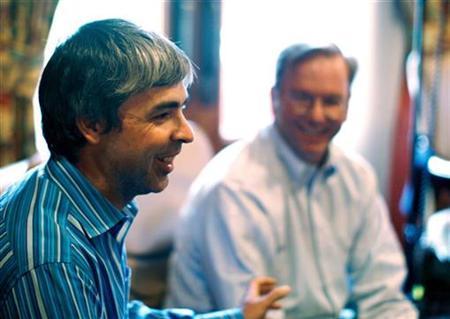
Google co-founder Page takes over, targets Facebook


(Reuters) - Google Inc co-founder Larry Page will take over as CEO from Eric Schmidt, a surprise that signaled Silicon Valley's most powerful Internet company was taking the offensive against fast-moving rivals like Facebook.

Schmidt will step aside on April 4 and make way for Page -- who created the company with fellow Stanford University alumnus Sergey Brin in 1998 -- to take the reins of a company that has dominated Internet search for a decade but is in danger of losing traffic to social networks like Facebook and Twitter.

"Day-to-day adult supervision no longer needed!" Schmidt tweeted after the announcement.

Schmidt, who became CEO in 2001 to bring more management experience to a then-fledgling company, will assume the role of executive chairman, focusing on deals and government outreach, among other things. Brin will concentrate on strategic projects.

"Larry is ready. It's time for him to have a shot at running this," Schmidt told analysts on a conference call.

Shares in the Internet search and advertising leader rose about 2 percent to $639 in extended trading.

Just days ago, Apple Inc CEO Steve Jobs announced a leave of absence, leaving lieutenant Tim Cook in charge of day-to-day operations. Like Google, Apple also announced results this week that blew past Wall Street's estimates.

"The Street will think it's a negative, that there is probably some issue going on. Google is trying to get more efficient and trying to get a tech guy in the seat to compete with Facebook," said UBS analyst Brian Pitz. "I don't think it changes anything strategically where the company is headed."

News of the change came as Google reported a 29 percent surge in both net profit and net revenue that beat forecasts.

Net income, excluding items, of $8.75 a share outstripped Wall Street's average forecast of $8.10.

Net revenue, excluding fees paid to partner websites, was $6.37 billion. Analysts polled by Thomson Reuters I/B/E/S, on average, were expecting net revenue of $6.06 billion.

STREAMLINING

The world's top Internet company is recruiting and going on an acquisitions spree, aiming to ensure its online products remain popular as surfers turn to new services like Facebook -- now the most heavily trafficked website -- and wireless gadgets.

On a conference call with analysts, Google CFO Patrick Pichette said a 10 percent, across-the-board pay raise instituted late last year was a direct attempt to staunch a flow of talent to hot Web upstarts in the Valley.

Google tried to buy fast-growing online local-shopping service Groupon for $6 billion but was rebuffed, Chicago Breaking Business, a Tribune Newspaper website, and other news outlets reported.

The question is whether Facebook's success could start to cut into Google's business, as investors debate whether marketers will advertise on both online services, or shift advertising dollars from Google to the world's largest social network.

Google said the management change was made as part of a plan to "streamline" decision making and create clearer lines of responsibility and accountability at the top.

"It's a good move. It (the triumvirate management structure) was always one of things that concerned us a little bit," said Ryan Jacob, portfolio manager with the Jacob Internet Fund. "It should streamline the decision-making process. They're in a fast-moving industry."

Schmidt now plans to sell about 534,000 shares of Class A common stock, the company said. Based on Google's closing share price of $626.77 on Thursday, he would earn about $334.7 million on the stock sale. He would still own about 2.7 percent of Google's outstanding capital stock, down from 2.9 percent before selling the shares.

"As Google has grown, managing the business has become more complicated. So Larry, Sergey and I have been talking for a long time about how best to simplify our management structure and speed up decision making," Schmidt said in a posting on the company's official blog.

"And over the holidays we decided now was the right moment to make some changes to the way we are structured."

Google also reported fourth-quarter financial results, beating Wall Street's net revenue expectations.

Schmidt said on his blogpost that Page, the son of a Michigan State University computer science professor, will now lead product development and technology strategy, areas that are "his greatest strengths."

"It will be interesting to see what he'll do that's different, what he could not have done in his prior role," said BGC Partners analyst Colin Gillis

Tuesday, January 18, 2011

Aircel renders voice updates for FB in India

New York, Jan 18: You don't have a smart phone, that allows to access Facebook when you are on the move, then you have something to feel happy. The Aircel subscribers can update their Facebook status by just calling 51555. Simply call and record the latest update, the message will be forthwith to your Facebook wall as an audio recording, which your friends can then just click to listen.

Buzz up!
The reason to introduce such a feature is the low percentage of smart phone users in India. When compare to the US and other Europe countries, the adoption of smart phones is very less in India. A statistic of 10 percent of young people use smart phones here.


This feature makes life easier for the Facebook users, they can update the status by simply calling to a number, instead of subscribing GPRS plan and buying a smart phone.

To avail this feature, Aircel users can call 51555, enter their credentials and update their wall from there.

Facebook users advised to remove personal details after developers granted access to phone numbers and addresses

It's the flip-side of enjoying instant communication with your friends.

Facebook has courted a fresh privacy row by allowing developers of apps access to sensitive information including telephone numbers and addresses.

The social networking site announced the change on its blog, saying: 'We are now making a user's address and mobile phone number accessible.'

Internet security analysts and privacy experts are now advising people to remove their phone numbers and addresses from the site.

Privacy row: Facebook has courted new controversy by allowing app developers access to sensitive information including telephone numbers and addresses

Privacy row: Facebook has courted new controversy by allowing app developers access to sensitive information including telephone numbers and addresses

While Facebook users must grant individual applications permission to access their details, it is likely that many who have clicked their approval plenty of times before will not notice the change in terms.

They will pass on their contact details unknowingly, leaving them more vulnerable to becoming victims of spam, it is feared.

Graham Cluley, of IT security firm Sophos, said: 'The ability to access users' home addresses will also open up more opportunities for identity theft, combined with the other data that can already be extracted from Facebook users' profiles.

'You have to ask yourself - is Facebook putting the safety of its 500-plus million users as a top priority with this move?'

Facebook, which gives advertisers the ability to target users according to their stated interests, geographical location and other insights, has been criticised increasingly over the years for how it handles the privacy of its account holders.

Facebook founder: Mark Zuckerberg's site has been criticised increasingly over the years for how it handles the privacy of its account holders

Facebook founder: Mark Zuckerberg's site has been criticised increasingly over the years for how it handles the privacy of its account holders

The official Facebook blog post on the subject explains that the company says: 'Because this is sensitive information, we have created the new user address and user mobile phone permissions.

'These permissions must be explicitly granted to your application by the user via our standard permissions dialogues.'

It also says that people are merely able to grant external developers the ability to see their own details, rather than those of their friends.

But it is often unclear who exactly is behind the small and seemingly harmless pieces of software available via Facebook, which many users enjoy signing up for in order to brighten up their profile pages or to play games or quizzes with friends.

Facebook has opted against a systematic program of vetting potential applications, such as that by Apple.

The website therefore inevitably hosts a number of potentially rogue, independent applications that have been designed by third parties to misleadingly gain access to users' information, and farm it out on as wide a scale as possible.

In a statement issued last night, a spokesman for the website said: 'We want to make it easy for people to take the information they've entered into Facebook with them across the web.

'This new permission gives people the ability to control and share their mobile phone number and address with the websites and apps they want to use.'

Last year, Facebook completely redesigned its privacy settings in response to an international backlash against how the social network had handled the personal information of its 500million users.

The modifications allowed users to decide which aspects of their data is available to view online.


Sunday, January 16, 2011

Facebook, Google join web future warning

London, Jan 16 (ANI): Web addresses are likely to run out as soon as November and to raise public awareness Google and Facebook have decided to switch their websites to a new system for one day in June.

Buzz up!
On June 8, a whole bunch of web giants, including Google, Facebook, Yahoo, will turn on a new way of running web addresses, reports the Telegraph.


The system, called IPv6, has been designed to stop the world running out of the web addresses that underlie the locating of websites and devices.

As of now, only 0.2 per cent of web users have access to the new protocol, however. 'World IPv6' Day is designed to encourage its adoption.

Vint Cerf, one of the web's founding fathers, is leading a global campaign to encourage web service providers and IT managers to switch from the current system, IPv4, to IPv6.

The new standard offers many trillions of new web addresses, but cannot be accessed from modems and routers that only use IPv4.

It is likely, however, that most of the changes needed will take place without consumers losing access to any part of the web because they will be part of the standard software and hardware upgrade cycle.

The availability of new web addresses will, it is hoped, allow more connected devices, such as tablet computers, as well as permitting more mundane devices to gain web addresses.

Writing on the Google Blog, Network Engineer Lorenzo Colitti said, "Google has been supporting IPv6 since early 2008, when we first began offering search over IPv6. Since then we've brought IPv6 support to YouTube and have been helping ISPs enable Google over IPv6 by default for their users. On World IPv6 Day, we'll be taking the next big step. Together with major web companies such as Facebook and Yahoo!, we will enable IPv6 on our main websites for 24 hours."

He added, however that "Our current measurements suggest that the vast majority of users will be unaffected. However, in rare cases, users may experience connectivity problems, often due to misconfigured or misbehaving home network devices." (ANI)